

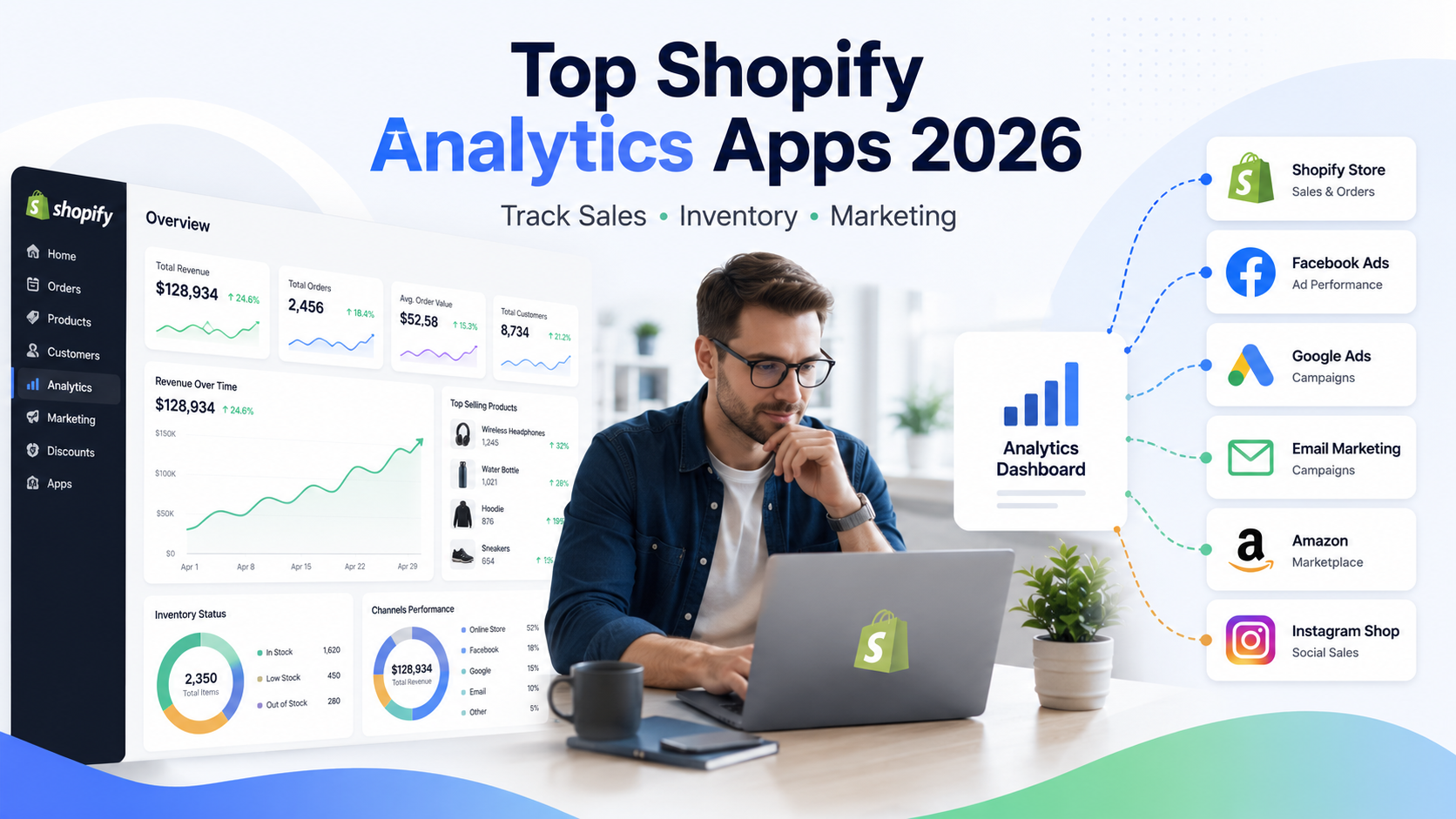
Top Shopify Apps for Multi-Channel Analytics in 2026
Running a successful Shopify store requires more than just making sales. Today’s merchants need visibility across multiple channels, including online stores, marketplaces, social media, email marketing, and paid advertising.
Without accurate reporting, it’s difficult to understand which channels drive revenue, where customers come from, and how inventory performs across your business.
In this guide, we’ll review some of the top Shopify apps for multi-channel analytics in 2026 and explain what merchants should look for when evaluating reporting and analytics tools.
What to Look for in a Multi-Channel Analytics App
Before choosing an analytics platform, consider the following features:
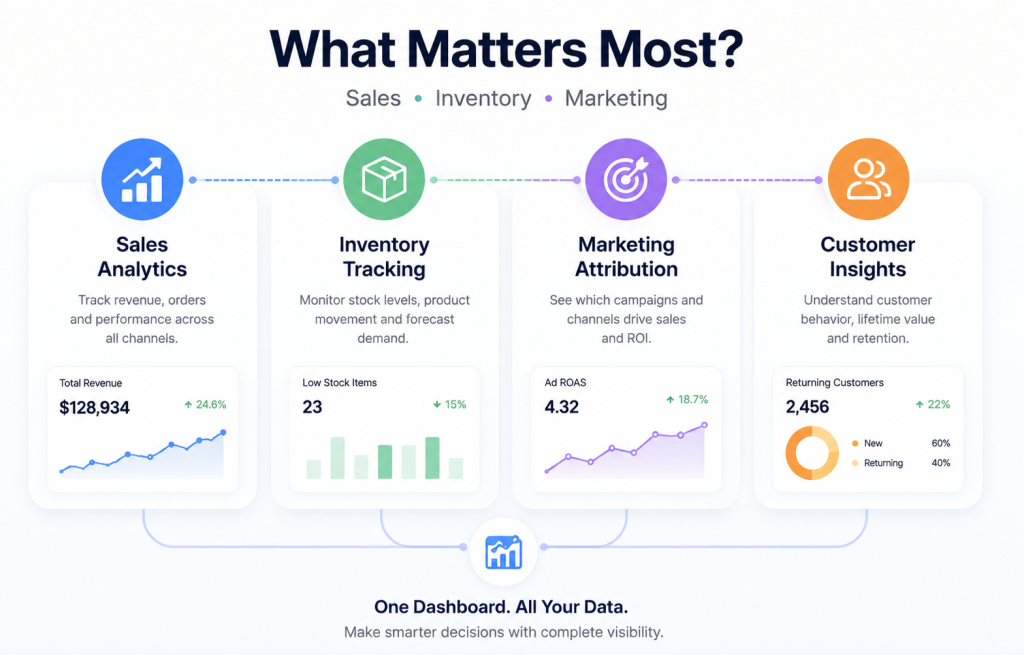
Unified Reporting
The best analytics tools combine data from multiple sources into a single dashboard.
This may include:
- Shopify sales
- Meta Ads
- Google Ads
- Email marketing platforms
- Marketplaces
- Customer lifetime value data
Inventory Visibility
Merchants should be able to track:
- Best-selling products
- Inventory turnover
- Stock forecasting
- Product performance by channel
Marketing Attribution
Understanding where sales originate helps merchants allocate marketing budgets more effectively.
Look for tools that connect:
- Paid advertising
- Email campaigns
- Social media traffic
- Organic search traffic
Custom Reports
Every store is different.
The ability to create custom dashboards and reports can help merchants focus on the metrics that matter most.
Top Shopify Apps for Multi-Channel Analytics
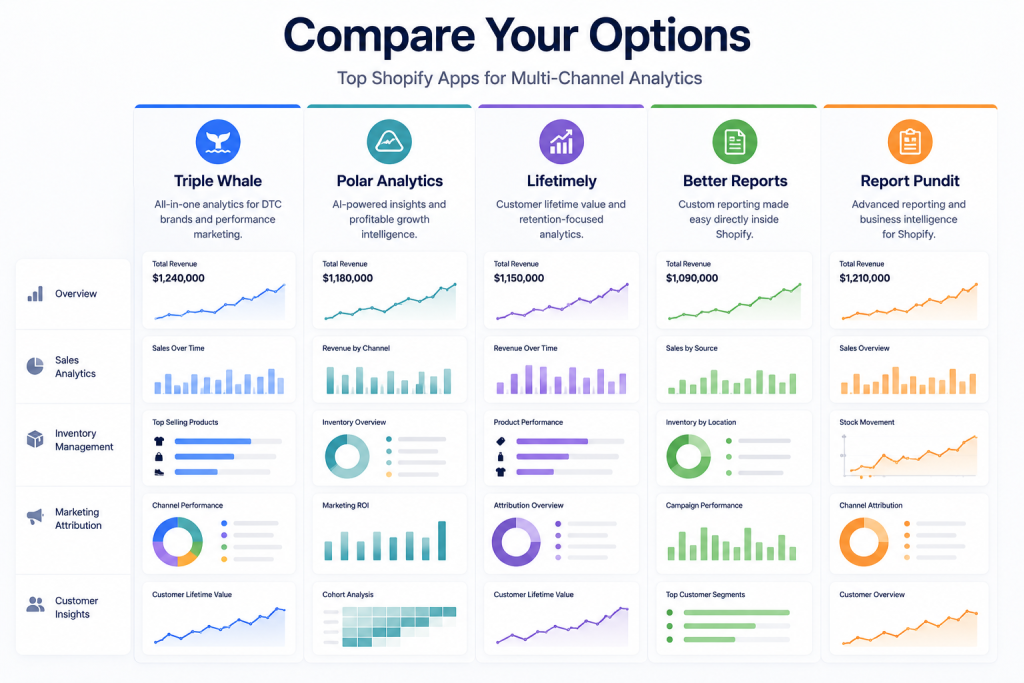
1. Triple Whale
Triple Whale is a popular ecommerce analytics platform designed for direct-to-consumer brands.
Key features:
- Marketing attribution
- Profit tracking
- Customer journey analysis
- Centralized dashboard
Best for:
Growing brands spending heavily on paid advertising.
2. Polar Analytics
Polar Analytics helps merchants consolidate data from multiple platforms into one reporting environment.
Key features:
- Marketing performance dashboards
- Inventory analytics
- Customer segmentation
- Forecasting tools
Best for:
Data-driven teams requiring advanced reporting.
3. Lifetimely
Lifetimely focuses on customer lifetime value and profitability reporting.
Key features:
- Cohort analysis
- Customer retention tracking
- Product profitability
- Revenue forecasting
Best for:
Merchants focused on customer retention and long-term growth.
4. Better Reports
Better Reports provides highly customizable reporting directly within Shopify.
Key features:
- Custom report builder
- Scheduled reports
- Inventory reporting
- Sales analytics
Best for:
Merchants who need flexible reporting without leaving Shopify.
5. Report Pundit
Report Pundit offers extensive reporting capabilities for Shopify stores.
Key features:
- Advanced data filtering
- Automated reporting
- Inventory insights
- Financial reporting
Best for:
Stores needing detailed operational reports.
Beyond Analytics: Optimizing Product Data Matters Too
Analytics helps merchants understand what is happening in their business.
But improving store performance also requires optimizing product content.
Product descriptions, titles, image alt text, and product metadata directly influence:
- Search visibility
- Conversion rates
- Customer experience
That’s where tools like Gelo.ai can help.
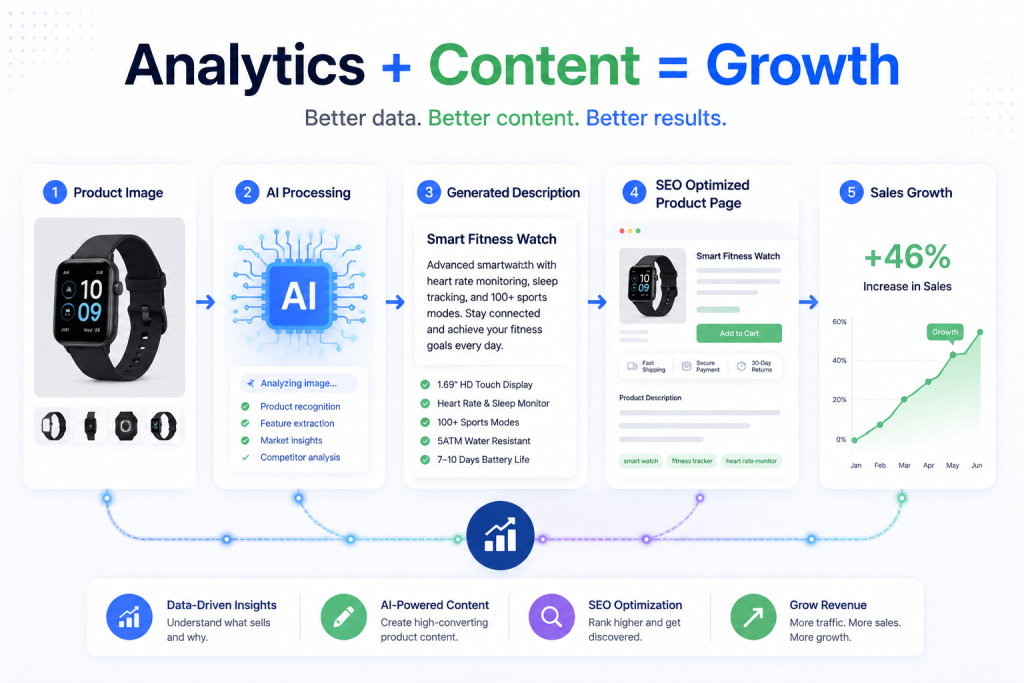
Gelo.ai – AI Product Descriptions from Images
Gelo.ai helps Shopify merchants generate:
- Product descriptions
- Product titles
- Bullet points
- SEO meta descriptions
- Image alt text
directly from product images.
Instead of manually writing content for every product, merchants can automate product content creation and launch products faster.
Choosing the Right Shopify Analytics Solution
The best app depends on your goals.
If you want:
- Attribution tracking → Triple Whale
- Advanced reporting → Polar Analytics
- Lifetime value analysis → Lifetimely
- Custom reporting → Better Reports
- Operational reporting → Report Pundit
Many merchants use multiple tools to gain a complete picture of store performance.
Final Thoughts
Multi-channel analytics has become essential for modern Shopify stores.
As competition increases in 2026, merchants need better visibility into:
- Sales performance
- Inventory management
- Marketing attribution
- Customer behavior
Combining powerful analytics tools with content optimization solutions like Gelo.ai allows Shopify merchants to make better decisions, improve efficiency, and scale faster.
Whether you’re managing a small Shopify store or a growing ecommerce brand, investing in the right technology stack can help you stay competitive in an increasingly data-driven marketplace.

Leave a Reply